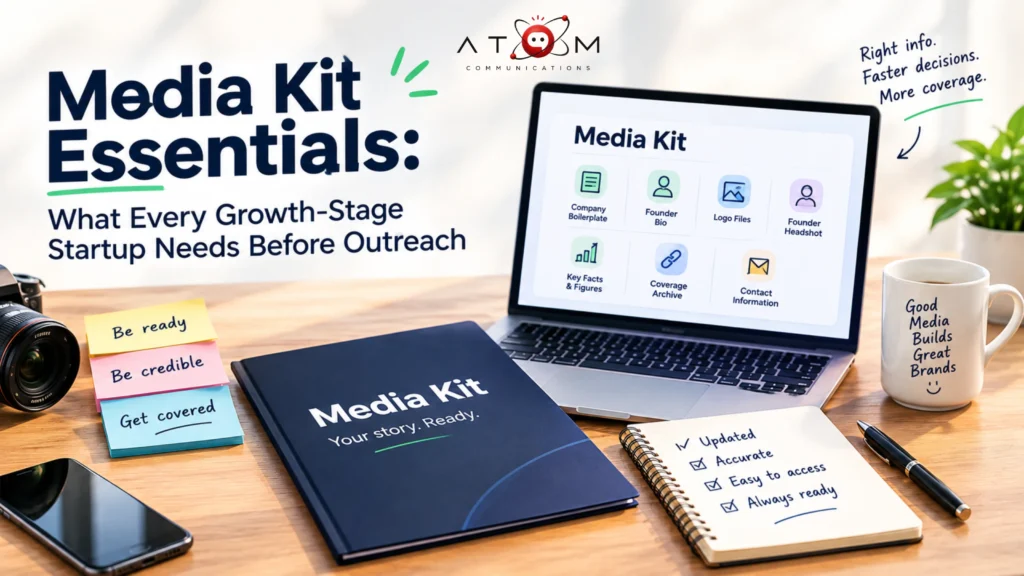
Media Kit Essentials: What Every Growth-Stage Startup Needs Before Outreach
SEO, AEO, and GEO get used interchangeably — but they optimize for three different buying moments. Here’s the real breakdown, and why early-stage B2B, fintech, and HR tech companies can’t treat GEO as optional in 2026.
What Google Ranking Actually Requires
Ensure Mobile-First Optimization
Local SEO Optimization
- Key takeaways
- Keep everything journalist-ready. A media kit should make it easy for journalists to verify and use company information quickly.
- Include the essentials: company boilerplate, founder bios, logos, headshots, key facts, coverage archive and contact details.
- Keep information current. Outdated funding, team or founder information can weaken credibility.
- Make assets easy to access. Journalists should not have to search through multiple folders or emails for basic materials.
- Prioritize usability over excessive design. A clean, fast and easy-to-scan media kit is more useful than an over-designed document.
- Treat it as a living PR asset. Review and update the media kit regularly as the company and its coverage evolve.
Most founders start media outreach with a deck and a Google Drive link nobody in a hurry will actually open. That’s usually the moment a promising pitch dies — not because the story was weak, but because the journalist had no fast, credible way to verify it and moved on to the next email in their inbox.
A media kit isn’t a nice-to-have brand asset. It’s the infrastructure that makes every other PR effort work faster and land better. Here’s what actually belongs in one at growth stage — and what most startups get wrong.
The Core Problem a Media Kit Solves
Journalists work under real time pressure. When a pitch lands, they have minutes, not hours, to decide if it’s credible enough to pursue. A scattered set of assets — a logo buried in an old email, a founder bio that’s three years out of date, no clear boilerplate — adds friction at exactly the moment you need none. A well-built media kit removes that friction entirely, so the only thing standing between a pitch and coverage is the strength of the story itself.
Talk to an AI Marketing Expert to Scale Faster and Smarter
What Belongs in a Growth-Stage Media Kit
A one-paragraph company boilerplate. This is the single most reused piece of text in your entire PR operation — it should appear, unchanged, at the bottom of every release and be readily available for any journalist writing a quick mention. It needs to state clearly what you do, who you serve, and why it matters, without adjectives doing the work that facts should be doing.
A founder bio, written for two lengths. A two-line version for quick attributions and a fuller paragraph for profile pieces or interview features. Keep both current — an outdated bio referencing a role or milestone you’ve since outgrown undermines credibility faster than founders realize.
High-resolution logo files, in multiple formats. Transparent PNG, and where relevant, both dark and light versions for different backgrounds. This sounds basic, but it’s one of the most common reasons a story runs without proper branding — the outlet simply didn’t have a usable file on deadline.
A founder headshot, professionally shot. Journalists and publications need this constantly, and a low-resolution phone photo signals a level of unpreparedness that quietly affects how seriously a pitch is taken.
Key facts and figures, kept current. Founding year, funding history, team size, key metrics you’re comfortable sharing publicly. This section should be treated as a living document, updated the moment any of these facts change — stale figures in a media kit have a way of ending up in print months later.
A coverage archive. Links to previous press mentions, organized and easy to scan. This does double duty: it signals credibility to a new journalist evaluating whether your story is worth their time, and it creates a visible, structured trail of third-party validation — exactly the kind of consistent, corroborated footprint that also strengthens how AI models come to trust and cite your brand over time.
Contact information that actually gets answered. A dedicated PR or founder email that’s monitored regularly, not a generic inbox that takes a week to respond. Coverage windows are often short; a slow reply can mean losing the story to a competitor who responded faster.
What Most Startups Get Wrong
The most common failure is treating the media kit as a one-time asset built before a launch and never touched again. Facts go stale, bios stop matching current roles, and the coverage archive falls a year behind actual placements. A media kit needs an owner and a quarterly review, not a single sprint.
The second common mistake is over-designing it at the expense of usability — a beautifully designed PDF that’s slow to load or awkward to extract text from does less for a journalist on deadline than a clean, simple page with everything clearly labeled and easy to copy.
Why This Matters Beyond Journalists Now
A well-structured, factually consistent media kit doesn’t just serve human outreach. The same clarity and consistency that makes a journalist’s job easier — clear facts, no promotional inflation, a documented coverage history — is exactly the kind of structured, verifiable information that strengthens a brand’s presence in AI-generated answers over time. A media kit built for accuracy rather than persuasion ends up doing quiet, compounding work well beyond the pitch it was built for.
Book a Free AI Marketing Strategy Consultation
The Standard Worth Building To
Before any serious outreach push, a founder should be able to answer one question honestly: if a journalist wanted to write about us in the next thirty minutes, do we have everything they’d need, ready and current? If the answer is no, that gap is worth closing before the next pitch goes out — because the story you’ve been trying to land may already be one your outreach infrastructure is quietly costing you.
At AtomComm, building this foundation is typically the first deliverable before any outreach campaign begins — not because it’s glamorous work, but because every pitch sent without it starts at a disadvantage the story itself shouldn’t have to overcome.
Proof & Outcomes
Journalists can quickly access accurate company information, founder details and supporting assets.
A centralized media kit reduces back-and-forth emails and eliminates the need to repeatedly send basic assets.
When an opportunity appears, your team already has the essential materials ready to share.
FAQs
A media kit is a centralized collection of company information and media assets designed to help journalists quickly understand, verify and cover a business.
A strong media kit can include a company boilerplate, founder bios, high-resolution logos, founder headshots, key company facts, previous media coverage and PR contact information.
It gives journalists quick access to the information and assets they need, reducing friction during the research and publishing process.
Yes. Include concise founder bios and professional headshots, particularly if founders are part of the company's media strategy.
Book a Free PR Strategy Session
Tell us a bit about your brand and goals. We’ll share a tailored press plan and timeline.