
Wikipedia and Wikidata: Why They Quietly Control Your AI Visibility
SEO, AEO, and GEO get used interchangeably — but they optimize for three different buying moments. Here’s the real breakdown, and why early-stage B2B, fintech, and HR tech companies can’t treat GEO as optional in 2026.
What Google Ranking Actually Requires
Ensure Mobile-First Optimization
Local SEO Optimization
- Key takeaways
- Wikipedia can be an important knowledge layer for how AI systems understand established entities.
- Wikidata adds structured, machine-readable information about companies, people, products, and organizations.
- A Wikipedia page cannot simply be created for marketing purposes; independent coverage and notability are critical.
- Credible third-party media coverage can strengthen the foundation needed for long-term entity visibility.
- Wikidata deserves separate attention because structured entity information can be useful even when a Wikipedia article isn’t appropriate.
- AI visibility is a long-term credibility project, not a shortcut or one-time SEO tactic.
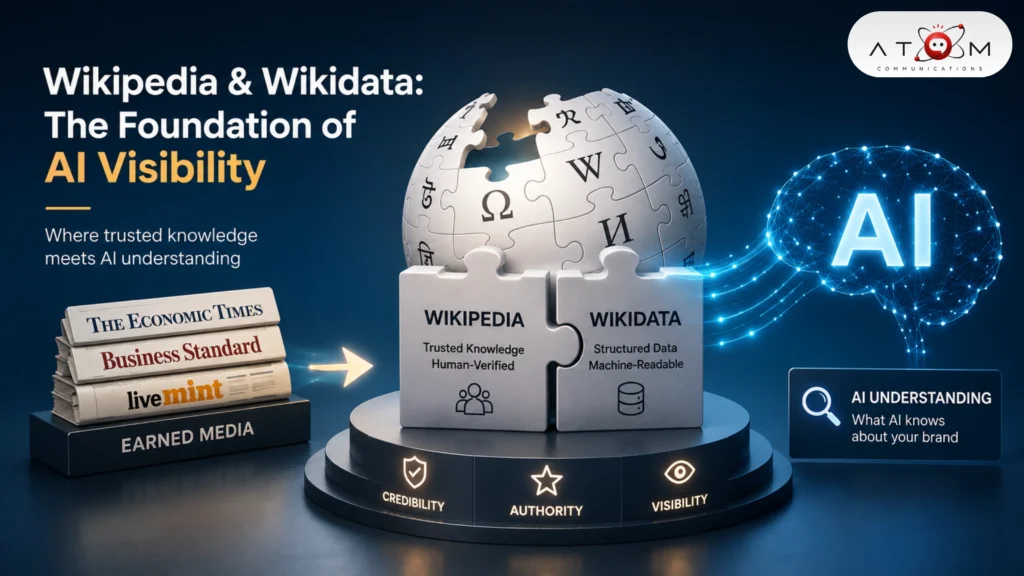
Every major language model — GPT, Gemini, Claude, Llama — was trained substantially on Wikipedia. Not as a footnote source, but as one of the highest-weighted, most-trusted datasets in the entire training corpus. That single fact explains more about AI visibility than most PR strategies account for.
If your brand has a Wikipedia page, it’s sitting inside the foundational layer of how these models understand the world. If it doesn’t, you’re building visibility on top of a structure that was never designed to include you.
Why Wikipedia Carries This Much Weight
Wikipedia isn’t just large — it’s structured, cross-referenced, and continuously fact-checked by a distributed editor community. For a language model being trained to be accurate, that combination is close to ideal. It’s also why Wikipedia frequently shows up as a cited or paraphrased source in AI-generated answers about companies, even when the underlying model isn’t explicitly told to prioritize it.
Wikidata compounds this. It’s Wikipedia’s structured-data counterpart — a machine-readable graph connecting entities (companies, people, products) with defined attributes: founding date, headquarters, industry, key people, related organizations. Search engines and AI systems increasingly pull from Wikidata to build “knowledge panels” and entity understanding, because structured data is easier for a machine to parse reliably than prose.
Together, these two properties form a kind of backbone entity layer. A company that exists cleanly in both is legible to AI systems in a way that a company with only a website and press mentions is not.
Talk to an AI Marketing Expert to Scale Faster and Smarter
The Honest Constraint: You Can't Just "Get" a Wikipedia Page
This is where most guidance oversimplifies the picture. Wikipedia has strict notability guidelines — a company needs significant, independent coverage in reliable secondary sources before an article is even eligible to survive. Self-written or agency-written pages that read as promotional get flagged and deleted quickly, and paid editing without disclosure violates Wikipedia’s terms of service.
The realistic path isn’t writing your own page. It’s earning the kind of independent, substantial press coverage — profiles, feature articles, in-depth interviews in recognized publications — that eventually makes a Wikipedia entry both eligible and defensible under community review. Wikipedia notability, in other words, is downstream of real PR, not a separate task you tackle on its own.
For most Series A/B companies in India, this means the sequence runs: build genuine coverage in outlets like Economic Times, LiveMint, or Business Standard first, then a Wikipedia presence becomes realistic — not the other way around.
Wikidata Is More Accessible, and Often Overlooked
Wikidata has a lower bar than Wikipedia proper, and it’s frequently ignored by companies that have otherwise invested in PR. A clean, accurate Wikidata entry — correct entity type, founding details, leadership, sector classification, linked to verifiable sources — gives AI systems and search engines a structured reference point even before a full Wikipedia article exists or if one never will.
This matters specifically for B2B companies that may never hit Wikipedia’s notability bar in their early years but still want a reliable, machine-readable presence. Wikidata is worth treating as its own project, not an afterthought to a Wikipedia page.
What This Means for Founders
If your GEO strategy stops at securing media coverage and improving your website, you’re missing the layer that quietly underwrites a large share of how AI models understand entities in the first place. Coverage feeds this layer, but the layer itself — Wikipedia, Wikidata, and the structured knowledge graphs built from them — deserves deliberate attention as its own line item, not an assumed byproduct.
This is also where a lot of founders get impatient and look for shortcuts — paid Wikipedia editors, fabricated notability. Those routes tend to backfire, either through page deletion or reputational risk once discovered. The more durable approach is slower and more familiar: build real coverage, document it accurately, and let structured presence follow from substance rather than attempt to reverse the order.
At AtomComm, this is part of how we think about the full visibility stack — earned media isn’t the end goal, it’s the raw material that eventually qualifies a brand for the structured, machine-trusted layers that quietly decide what AI systems know and repeat about you.
For founders building long-term category authority, this is a multi-year project, not a campaign. But it’s one of the few visibility assets that, once built properly, is genuinely difficult for competitors to replicate quickly.
Book a Free AI Marketing Strategy Consultation
Proof & Outcomes
A consistent presence across authoritative and structured sources makes it easier for search and AI systems to distinguish your company and understand what it does.
Wikidata can provide machine-readable information such as company type, industry, founding details, leadership and relationships between entities.
Independent media coverage, factual company information and structured data can work together to create a more credible digital footprint.
FAQs
Wikipedia provides extensive human-readable knowledge, while Wikidata provides structured, machine-readable information. Together, they can contribute to how search engines and AI systems understand entities.
No. A company should not create a Wikipedia page simply for SEO or marketing. Wikipedia has notability requirements based on significant independent coverage.
You can participate in Wikipedia, but creating promotional content about your own company can create conflicts of interest. The article must meet Wikipedia's policies and notability standards.
Wikidata is a free, collaborative knowledge base containing structured data about entities such as companies, people, products, organizations and places.
Book a Free PR Strategy Session
Tell us a bit about your brand and goals. We’ll share a tailored press plan and timeline.