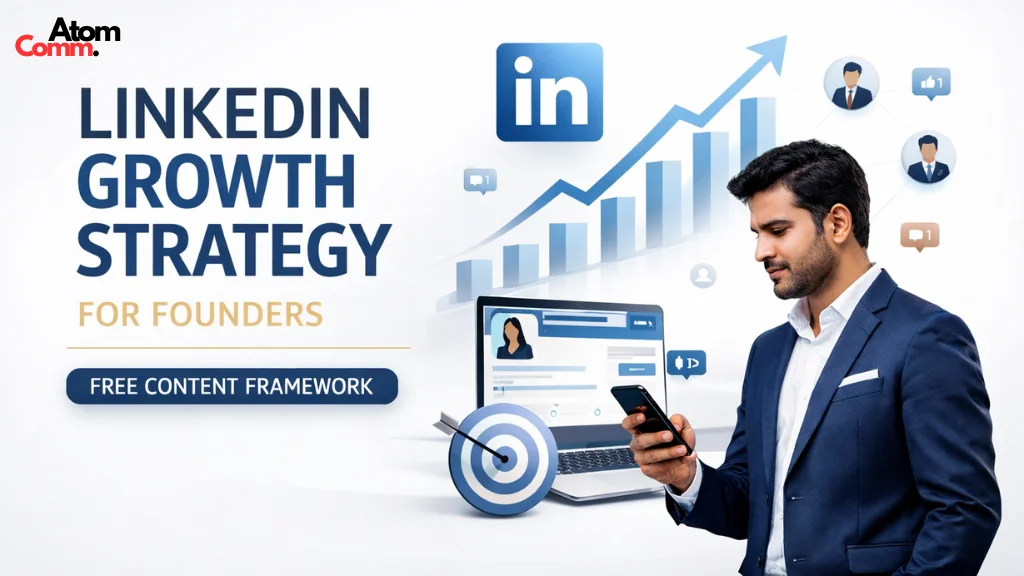
LinkedIn Growth Strategy for Founders (Free Content Framework)
A practical LinkedIn growth strategy for Indian founders, including a structured content framework to build authority, visibility, and inbound opportunities in 2026.
LinkedIn Matters More for Founders
A Structured Content Framework That Works
Converting Visibility Into Opportunity
- Key takeaways
LinkedIn growth for founders is about authority, not vanity metrics
Consistency of positioning matters more than posting frequency
A structured content framework builds long-term narrative clarity
Industry insight, operational transparency, opinion, and selective storytelling create strong positioning
Inbound opportunities increase when content aligns with business goals
Profile growth is a lagging indicator; credibility perception is the real asset
In 2026, LinkedIn functions as digital reputation infrastructure, not just a content platform
For founders in India, LinkedIn is no longer a vanity platform.
It has become a credibility engine.
Investors review it before meetings. Journalists scan it before interviews. Candidates check it before accepting offers. Prospective clients often form first impressions long before a conversation happens.
Yet most founders approach LinkedIn without structure. They post inconsistently, react to trends, or share surface-level motivation without building a clear narrative.
Growth on LinkedIn in 2026 is not about posting more.
It is about being remembered for something specific.
This guide explains how founders can build authority intentionally using a simple, repeatable content framework.
Why LinkedIn Matters More for Founders Than for Brands
Company pages rarely build deep engagement. Personal profiles do.
People follow individuals, not logos. Media prefers quoting founders over brand accounts. Algorithms reward authentic perspective over corporate messaging.
When founders consistently articulate industry shifts, operational realities, and clear viewpoints, three long-term assets begin to form: recognition, credibility, and trust.
LinkedIn then becomes more than a distribution platform. It becomes a public record of leadership thinking.
The Real Objective: Authority, Not Audience Size
Follower count is a misleading metric.
A smaller, relevant audience within your industry carries more value than a large but unfocused one. Authority is built when your name becomes associated with a specific domain.
In 2026, founders should aim to be known for one or two core themes. When someone hears your name, a clear idea should immediately follow.
That clarity is more powerful than scale.
Talk to a Social Media Expert to Drive Engagement That Converts
A Structured Content Framework That Works
Instead of random updates, founders benefit from repeating four types of content consistently.
The first is industry perspective. These posts reflect how you interpret shifts in your sector. They demonstrate awareness and positioning without needing to promote your company directly.
The second is operational insight. Sharing real lessons from hiring, product decisions, fundraising, or scaling creates credibility because it signals lived experience. Practical transparency builds faster trust than abstract advice.
The third is opinion. Thoughtful, well-articulated viewpoints make a founder memorable. This does not mean chasing controversy. It means taking a position where others remain neutral.
The fourth is selective personal narrative. When shared carefully, formative experiences and turning points humanise authority. The key is relevance. Personal stories should strengthen professional positioning, not distract from it.
Repeating these themes monthly creates rhythm without monotony.
Consistency Outperforms Intensity
Daily posting is not mandatory.
Two or three high-quality posts per week, aligned with a clear narrative, are more effective than daily content with no positioning.
LinkedIn’s algorithm increasingly rewards engagement depth. Meaningful comments, saves, and discussion quality matter more than superficial reactions.
Authority compounds through repetition. Visibility spikes come and go.
Writing That Resonates on LinkedIn
LinkedIn writing works when it feels conversational yet precise.
Short paragraphs improve readability. Direct statements increase retention. Specific examples signal authenticity.
The strongest posts often read like distilled insight rather than long essays. They feel intentional, not improvised.
When a founder writes clearly and consistently, people begin to associate clarity with competence.
Talk to a Social Media Expert and Plan Your Growth the Right Way
Converting Visibility Into Opportunity
Growth on LinkedIn should translate into tangible outcomes.
Over time, consistent positioning leads to better inbound conversations, stronger investor curiosity, higher-quality hiring interest, and increased media visibility.
The key is alignment. If a fintech founder consistently writes about regulatory complexity and credit risk, relevant stakeholders naturally engage. If a SaaS founder repeatedly shares enterprise sales insights, decision-makers begin paying attention.
Clarity attracts alignment.
What Founders Often Get Wrong
The most common mistake is using LinkedIn as a notice board for company updates. Another is copying viral formats that have no connection to personal positioning.
Inconsistency is equally damaging. When founders disappear for months, audience memory resets. Authority requires visible continuity.
LinkedIn rewards those who treat it as long-term infrastructure rather than occasional promotion.
LinkedIn in 2026: Digital Reputation Capital
LinkedIn is increasingly functioning as a founder’s searchable credibility archive.
When someone Google your name, your LinkedIn presence is often one of the first impressions. A consistent, well-structured content strategy strengthens not only platform visibility but overall digital authority.
Over time, this compounds into trust.
And trust drives opportunity faster than reach ever will.
Talk to a Social Media Expert and Shape a Clear, Long-Term Content Strategy
Proof & Outcomes
Higher-quality inbound messages from investors, media, and partners
Clearer perception alignment between founder and company narrative
More speaking and collaboration opportunities
FAQs
Two to three high-quality posts per week are sufficient if they are aligned with a clear narrative strategy.
Follower count is secondary. Relevance and positioning within the right audience matter far more.
Typically 60–90 days of consistent, structured posting begin to show visible engagement and inbound impact.
A balanced mix works best. Industry insight and operational experience build authority, while selective personal stories humanise it.
Book a Free PR Strategy Session
Tell us a bit about your brand and goals. We’ll share a tailored press plan and timeline.