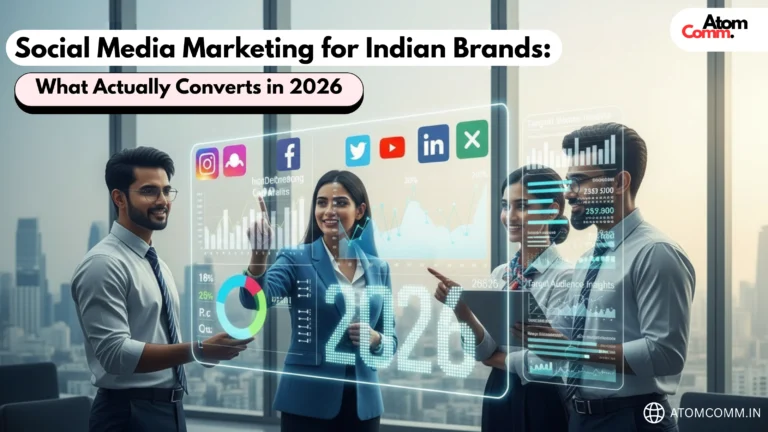
Social Media Marketing for Indian Brands: What Actually Converts in 2026
Social media visibility is easy to buy, but conversions are harder to earn. This guide explains what truly drives social media conversions for Indian brands in 2026 — focusing on trust, consistency, and intent rather than trends and vanity metrics.
No Longer Converts on Social Media in India
Founder-Led, Insight-Driven Content
Consistency of Narrative Across Platforms
Social media reach in India has never been higher.
But conversion rates have never been more confusing.
Brands are posting daily. Reels are getting views. Followers are growing.
Yet sales teams still ask the same question:
“Why isn’t social media converting?”
The answer is simple but uncomfortable:
Most Indian brands are optimising social media for visibility, not conversion.
In 2026, social media marketing in India is no longer about posting more.
It’s about earning trust, reducing friction, and guiding intent.
This blog breaks down what actually converts on social media for Indian brands — and what no longer works.
The Big Shift: From Attention to Action
Between 2020 and 2024, social platforms rewarded:
- Frequent posting
- Trend participation
- Viral hooks
By 2026, platforms reward something else entirely:
- Retention
- Credibility
- Meaningful engagement
- Commercial relevance
Algorithms have matured. Audiences have matured even faster.
Indian users now ask subconsciously:
- Do I trust this brand?
- Do they understand my problem?
- Have others validated them?
- Is this worth my time or money?
If your content doesn’t answer these — it won’t convert.
What No Longer Converts on Social Media in India
Let’s clear the noise first.
Vanity Content
- Generic motivational quotes
- Overused “growth hacks”
- Empty brand slogans
They may get likes. They don’t drive action.
Trend-Only Reels
- Dancing founders
- Forced humour
- Unrelated meme formats
Trends bring reach — not relevance.
Hard Selling Posts
- “Buy now”
- “Limited offer”
- “DM for pricing” (without context)
Indian audiences are highly price-aware and trust-sensitive.
They don’t convert without confidence.
What Actually Converts in 2026 (India-Specific)
1. Founder-Led, Insight-Driven Content
In India, people don’t just follow brands — they follow people they trust.
Content that converts:
- Founder POVs on industry changes
- Honest lessons from failure and growth
- Opinions backed by experience
- Clear thinking, not polished marketing
Why it works:
- Builds authority
- Humanises the brand
- Shortens trust-building time
In B2B, fintech, SaaS, consulting, and even D2C — founder visibility directly influences conversion.
2. Proof-Based Storytelling (Not Claims)
Indian audiences are skeptical — and rightfully so.
What converts:
- Case studies
- Customer stories
- Screenshots of outcomes
- Before–after narratives
- Real numbers, even if small
Instead of saying:
“We help brands grow faster”
Say:
“This is how one brand increased qualified leads by 38% in 90 days — and what didn’t work.”
Proof beats polish. Every time.
3. Educational Content That Reduces Buying Anxiety
Conversion happens when doubt disappears.
Content that reduces friction:
- Explainers
- Comparison posts
- “What to expect” breakdowns
- Pricing logic explanations
- Mistakes to avoid
Indian buyers research deeply before purchasing — especially in:
- Services
- Software
- High-ticket products
Social content that educates before selling converts far better than promotional posts.
4. Consistency of Narrative Across Platforms
In 2026, users check brands across:
- Website
- Media articles
If your messaging feels inconsistent, trust drops.
High-conversion brands ensure:
- Same core narrative everywhere
- Aligned tone and positioning
- Clear category association
- Repeated credibility signals
Consistency creates familiarity.
Familiarity drives conversion.
5. Social Proof That Feels Organic (Not Forced)
Indian users are extremely sensitive to fake authority.
What works:
- Mentions by others
- Screenshots of inbound messages
- Community conversations
- User-generated content
- Media features reposted thoughtfully
What doesn’t:
- Buying followers
- Over-tagging influencers
- Fake testimonials
Social proof works when it looks earned, not manufactured.
6. Low-Friction CTAs That Match Intent
Most social media CTAs fail because they ask too much too soon.
Better-performing CTAs in 2026:
- “Read how this was done”
- “Here’s the breakdown”
- “Comment ‘guide’”
- “Save this”
- “DM if this is relevant to you”
High-friction CTAs like “Book a call” only convert when:
- Trust is already established
- The content has warmed the audience
Conversion is a journey, not a button.
Platform-Specific Conversion Insights (India)
Best for:
- B2B leads
- Founder authority
- Long-form insights
- High-ticket services
What converts:
- POV posts
- Carousels with depth
- Case studies
- Comment-led conversations
Best for:
- D2C
- Community building
- Visual proof
- Brand recall
What converts:
- Relatable storytelling
- Reels with substance
- Testimonials
- DM-based nurturing
YouTube & Shorts
Best for:
- High-consideration products
- Education-heavy categories
- Trust-building at scale
What converts:
- Explainers
- Walkthroughs
- Honest reviews
- Long-form + short-form combination
Why PR and SEO Now Influence Social Conversions
Social media doesn’t convert in isolation anymore.
Conversion increases when:
- Users recognise your brand from media
- Your content ranks on Google
- Your founder appears credible outside social platforms
This is why high-conversion brands integrate:
- Social + PR
- Social + SEO
- Social + content marketing
Social media becomes the bridge, not the destination.
Measuring What Actually Matters
Stop measuring:
- Likes
- Follower count
- Reach alone
Start measuring:
- Profile visits
- Saves & shares
- DM quality
- Branded search lift
- Assisted conversions
If social media doesn’t influence search behaviour or inbound interest — it’s not converting.
Final Thought: Conversion Is Built, Not Triggered
In 2026, Indian brands don’t lose on social media because of algorithms.
They lose because:
- They chase trends over trust
- They post without positioning
- They optimise for noise, not relevance
Social media converts when:
- The brand feels credible
- The story feels consistent
- The value feels real
- The timing feels right
Visibility opens the door.
Trust closes the deal.
That’s what actually converts in India now — and going forward.
Proof & Outcomes
Better alignment between social media and sales outcomes
Lower dependency on aggressive paid promotions
Stronger brand recall and trust across digital touchpoints
FAQs
Because reach does not equal trust. Conversion depends on credibility, relevance, and clarity — not just visibility.
There is no single best platform. Conversion depends on audience intent, category, and how well trust is built across platforms.
They help with visibility, but without substance and consistency, they rarely drive meaningful conversions.
Rarely. Social media works best when integrated with SEO, PR, and website experience.
Book a Free PR Strategy Session
Tell us a bit about your brand and goals. We’ll share a tailored press plan and timeline.